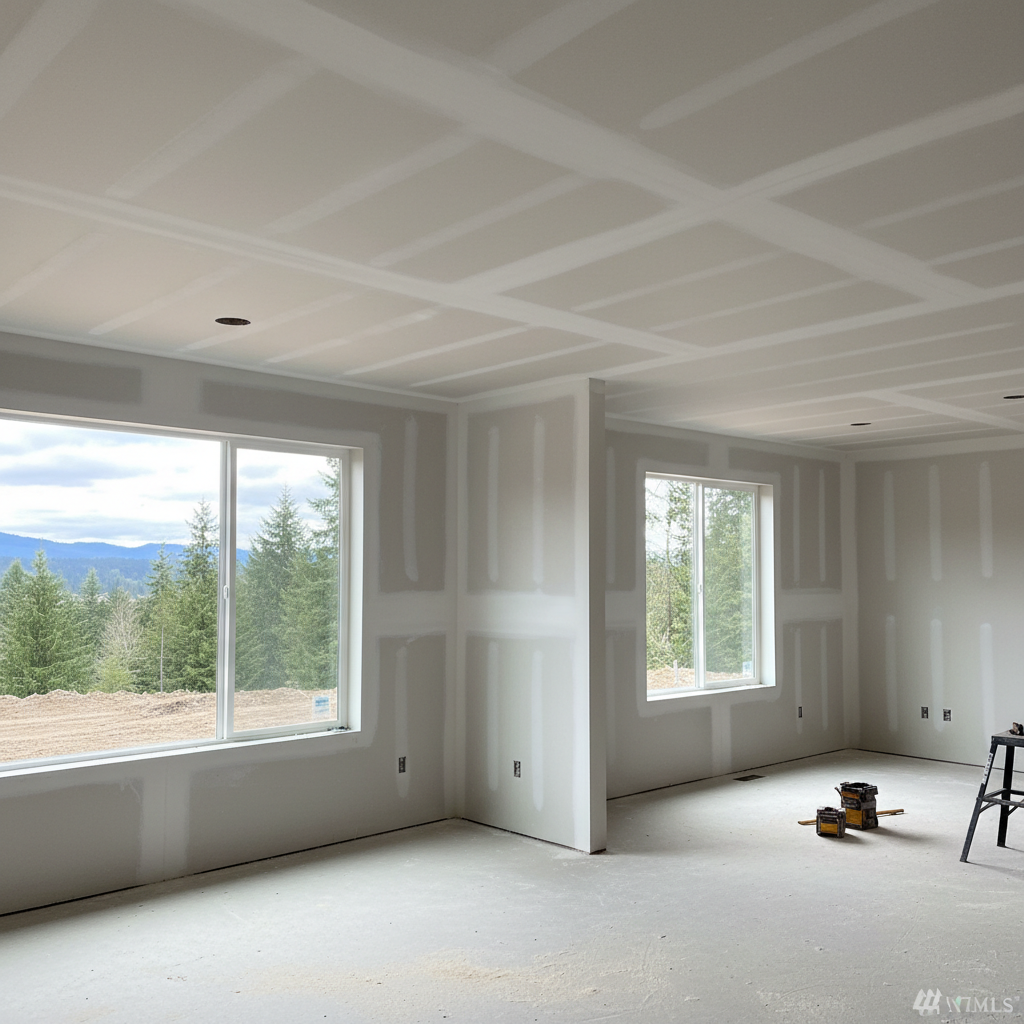
Alright, let's talk about drywall. Specifically, I want to go over what I've seen go wrong when folks here in Tacoma try to get new sheetrock put up, whether it's for a big remodel or just a small addition. You'd think it's pretty straightforward, right? Boards on walls, mud, paint. But there are some real pitfalls that can turn a simple job into a total nightmare. Here are the biggest mistakes I see homeowners make, and how you can steer clear of them.
Mistake #1: Going with the Lowest Bid, No Questions Asked
This one's a classic, honestly. It's probably the most common way people end up regretting their drywall project. You get a few bids, one comes in super low, and you think, "Wow, I struck gold!" More often than not, you've just found a shortcut to a really bad job.
A low bid usually means one of a few things: the contractor is cutting corners on materials, they're underpaying their crew (which often means less experienced guys, let's be real), or they're going to rush the job. Sometimes, they'll just hit you with a bunch of 'unexpected' extra charges later on. Good drywall work takes time, skill, and quality materials. If someone's price is drastically lower than everyone else, there's a reason for it, and it's rarely good for you. Ask yourself: are they licensed and insured? Do they have references? What's their process for protecting your home? A good contractor won't be the cheapest, but they'll give you peace of mind and a quality finish.
Mistake #2: Not Understanding the Drywall Finish Levels
This is a big one that causes a lot of disappointment. You might think 'drywall is drywall,' but there are different levels of finish, and they make a huge difference in how your walls look once they're painted. We're talking Level 0 all the way up to Level 5.
Most residential projects need at least a Level 4 finish, especially if you're using anything other than a very heavy texture. If you're going for flat paint or a light texture, you really want a Level 4, or even Level 5. A Level 3 might be fine for a garage or a closet, sure, but put flat paint on it in a living room, and every tape joint and screw pop will show up like a sore thumb. I've had clients call me in to fix walls that another crew supposedly 'finished,' only to find they only did a Level 2 or 3. It's a costly fix to bring it up to standard. Make sure you discuss and agree on the specific finish level with your contractor before any work starts. If they don't know what you're talking about, well, that's a red flag.
Mistake #3: Ignoring Moisture and Ventilation Issues
Here in Tacoma, we know a thing or two about moisture. It's just part of living in the PNW. But ignoring that fact when you're planning your drywall installation can lead to big problems down the road. I've seen it happen in older homes in places like the North End, where basements or bathrooms don't have proper ventilation.
Standard drywall isn't designed for high-moisture areas. If you're putting up sheetrock in a bathroom, laundry room, or a basement that's prone to dampness, you absolutely need to use mold-resistant drywall, often called 'green board' or 'purple board.' Even better, use cement board for shower enclosures. If you just slap up regular drywall in a damp environment, you're inviting mold and mildew to set up shop, which means tearing it all out and starting over sooner than you'd like. A good contractor from Precision Drywall Tacoma will always bring this up and recommend the right materials for the specific conditions of your home.
Mistake #4: Not Protecting Your Home During the Process
Drywall is messy. There's just no way around it. Cutting, sanding, mudding – it all creates a fine, pervasive dust that will get everywhere if you're not careful. I've walked into homes where the contractor clearly didn't bother with proper containment, and the homeowner is left with a thick layer of dust on everything, even in rooms not being worked on.
Before any work starts, your contractor should be sealing off doorways with plastic sheeting, covering floors with drop cloths, and protecting any furniture that can't be moved. They should also be using dust collection systems when sanding. If they don't mention dust control or seem to brush off your concerns, that's a sign they might not be as professional as you'd hope. It's your home; make sure they treat it with respect during what's inherently a dusty process.
Mistake #5: Not Having a Clear Schedule and Communication Plan
This isn't just about drywall, but it's super important for any home project. You need to know when people are showing up, what they'll be doing, and when they expect to be done. I've heard too many stories of contractors who just disappear for days, or don't communicate delays, leaving homeowners completely in the dark.
Before you sign anything, get a clear timeline. Ask about daily updates, who your point of contact will be, and how they handle unforeseen issues. A good contractor will set expectations upfront and keep you informed, even if things go off schedule. Drywall isn't a one-day job; it involves multiple steps like hanging, taping, mudding, drying times, and sanding. You need to know the sequence and how long each phase will take so you can plan your life around it. Don't be afraid to ask for a detailed schedule; it's your right as the homeowner.
Avoiding these common mistakes will save you a lot of stress, money, and headaches down the road. Do your homework, ask the right questions, and don't settle for anything less than a professional job. Your walls are a big part of your home's look and feel, so get them done right the first time.