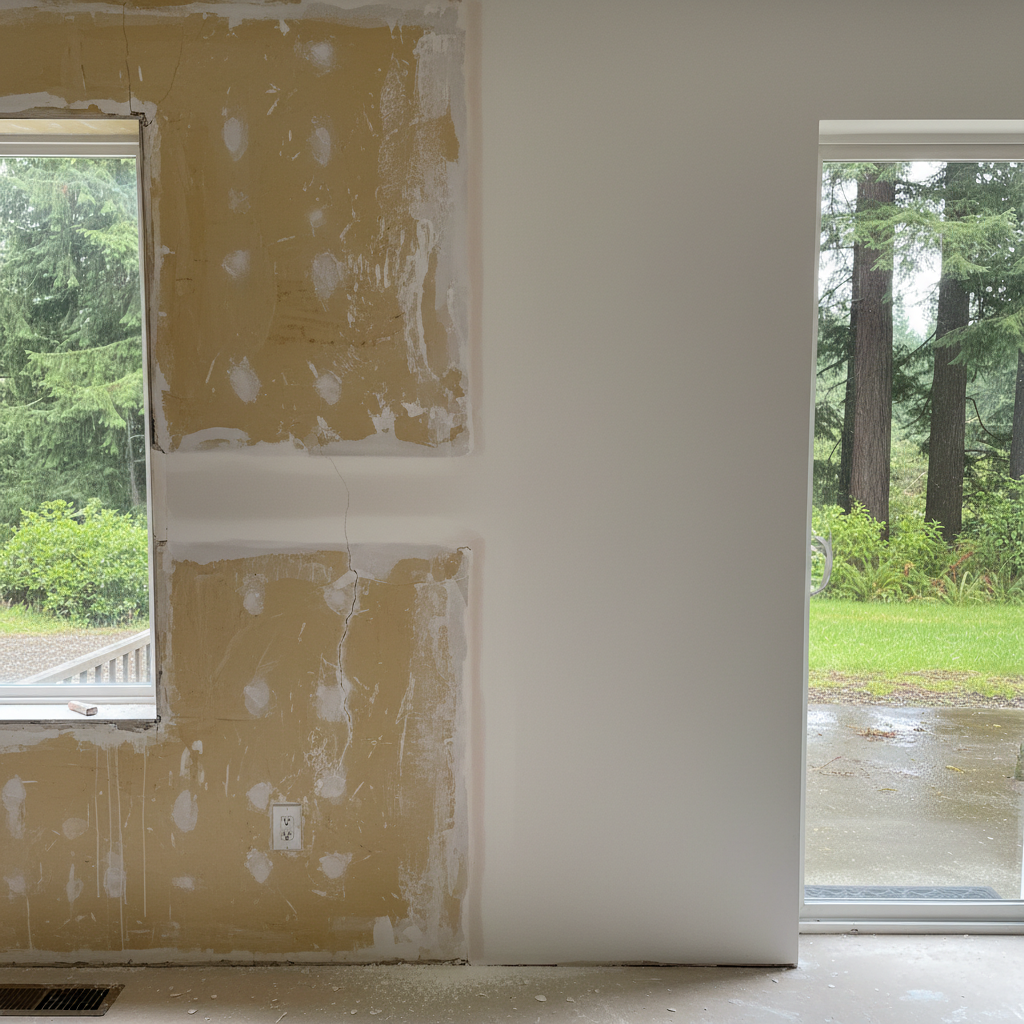
Alright, let's talk about those dings and holes in your walls. Happens to the best of us, right? Maybe you moved a couch, maybe the kids got a little too enthusiastic, or maybe something just decided to fall off the wall. Whatever it is, you're looking at a repair, and you've basically got two main ways to go about it: a full drywall patch, or just filling it with joint compound.
Now, I see folks try both all the time, and there's a time and a place for each. But if you want a repair that actually lasts and looks good, you gotta pick the right tool for the job. Let's dive into it.
The Joint Compound 'Quick Fix'
This is what most people reach for first. You grab a tub of joint compound, maybe some spackle, and you just fill the hole. It's fast, it's cheap, and for really small stuff, it can actually work. Think nail pops, tiny screw holes, or those little scuffs where the paint got knocked off but the drywall paper is still intact.
- Cost: Super low. A small tub of compound or spackle is only a few bucks.
- Time: Very quick. You can fill it in minutes, though you'll need to wait for it to dry between coats, which can still take a few hours.
- Durability: This is where it falls short. Joint compound isn't designed to be a structural filler. If your hole is bigger than, say, a quarter, or if it goes all the way through the drywall, just filling it with compound is going to sag, crack, or just fall out over time. It simply doesn't have the strength to hold itself together in a void.
- Appearance: For tiny imperfections, it can blend in perfectly after sanding and painting. For anything larger, you'll often see a ghost of the repair, or worse, a noticeable depression where the compound shrunk or failed.
- Maintenance: You'll probably be re-doing this repair sooner rather than later if it's used on anything substantial.
I've seen so many homeowners in older Tacoma homes, especially around the North End where walls can be a bit more brittle, try to spackle over a bigger ding. It just doesn't hold up. You need something more.
The Drywall Patch Method
This is the professional way to fix anything from a fist-sized hole to a section of wall that's been cut out for plumbing. It means cutting out the damaged area, fitting a new piece of drywall into that space, taping the seams, and then applying joint compound over the tape and fasteners to blend it in. It's more involved, but it's the right way to do it.
- Cost: Higher than just compound, because you're buying a small piece of drywall, tape, and more compound. If you're hiring someone like Precision Drywall Tacoma, you're also paying for labor and expertise.
- Time: Definitely more time-consuming. You're cutting, fitting, taping, and then applying multiple coats of compound with drying time in between. It's usually a multi-day process, even for a small patch.
- Durability: Excellent. When done right, a drywall patch is as strong as the original wall. You're replacing damaged material with new, structurally sound material. It's built to last.
- Appearance: Seamless. The goal here is for the repair to completely disappear once it's sanded, primed, and painted. You shouldn't be able to tell there was ever a hole there.
- Maintenance: Virtually none. Once it's done, it's done. It'll stand up to normal wear and tear just like the rest of your wall.
My Recommendation for Tacoma Homeowners
Look, if it's a tiny little scuff, a nail hole, or something smaller than a dime, go ahead and use a little spackle or joint compound. You'll be fine. But for anything bigger than that – say, a golf ball size or larger – you absolutely need to do a proper drywall patch.
Especially here in Tacoma, where we get a lot of moisture and older homes might have walls that have settled a bit, you want a repair that's going to hold up. Just slathering compound into a big hole is a recipe for a recurring problem. You'll see it crack, sag, or just fall out, and you'll be back to square one, probably with a bigger mess to deal with.
A proper patch, even if it seems like more work upfront, saves you time, money, and headaches down the road. It's a permanent fix, and that's what you want for your home. If you're not comfortable tackling the patching yourself, that's what we're here for at Precision Drywall Tacoma. We make those holes disappear like they were never there.