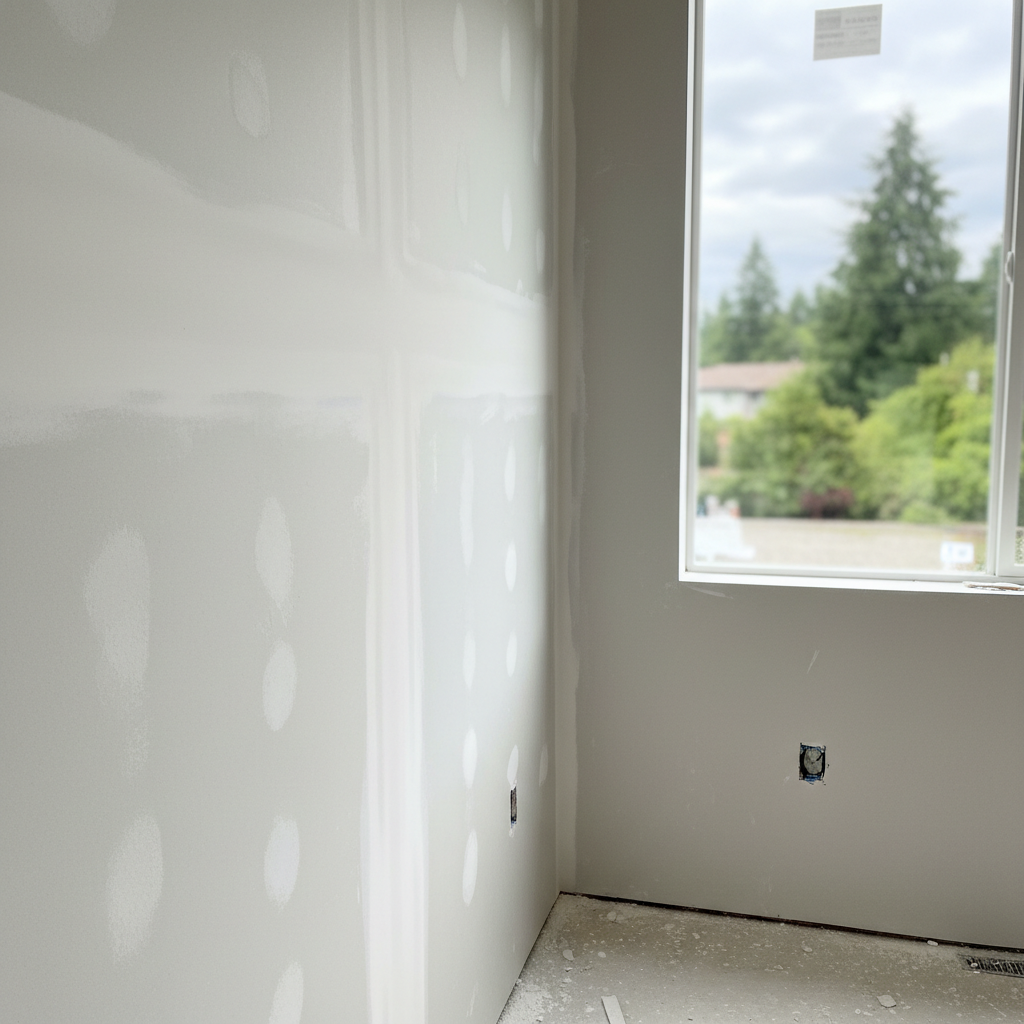
Alright, let's talk drywall installation. I get it, you’re a homeowner in Tacoma, you’ve got a project, and you’re wondering if you can save a few bucks by doing some of it yourself. That’s a smart way to think, and honestly, some parts of drywall installation are totally within reach for a handy person. But there are definitely times when you’re better off calling in the cavalry. Here’s my take on it, based on years of seeing what works and what doesn’t.
Before You Even Think About Hanging a Sheet
First things first, planning is everything. You can't just slap up some boards and call it a day, can you? You need to make sure your framing is solid, plumb, and square. Any wobbles or bows in your studs will show up big time in your finished walls. Trust me, you don't want to spend hours taping and mudding only to have a wavy wall staring back at you.
Think about your electrical and plumbing too. Are all your boxes in, wires run, and pipes secured? This is your last chance to make sure everything behind the wall is perfect. Once that drywall goes up, it's a huge headache to get back in there. Oh, and consider insulation. If you're insulating, get that done before the drywall. It's way easier.
One thing I always tell folks around here, especially if you're in an older Tacoma home, say up on the North End, is to check for moisture. Our climate means dampness can be an issue. Make sure you've addressed any leaks or condensation problems before you seal up those walls. You really don't want mold growing behind your brand new drywall.
What You Can Probably Handle Yourself
Okay, so what parts of this job are good for a DIYer? Hanging the sheets, surprisingly, can be done by a homeowner, especially in smaller rooms or if you have a helper. It's physical work, no doubt, and those 12-foot sheets can be heavy, but it's not exactly rocket science.
- Measuring and Cutting: You can definitely measure your walls and cut your drywall. A utility knife, a T-square, and a straightedge are your best friends here. Score it, snap it, and cut the paper on the other side. Maybe practice on a scrap piece first.
- Attaching to Studs: Screwing the drywall to the studs is also something you can do. You'll need a drywall screw gun or a drill with a depth-setting bit. The key is to sink the screw head just below the surface of the paper without tearing it. You'll get the hang of it pretty quick.
- Small Patches: If you're just doing a small repair or a single sheet replacement, you can absolutely tackle that. The principles are the same, just on a smaller scale.
For ceilings, though, it gets a lot tougher. Those sheets are heavy, and holding them up while screwing them in is a two-person (or even three-person) job, or you need a drywall lift. If you're doing a whole ceiling, that's often where people decide to call Precision Drywall Tacoma.
When It's Time to Call a Pro (Like Me)
Here's where I'm going to be really straight with you. While hanging the sheets is doable, the finishing work – taping, mudding, sanding – that's where the real skill comes in. And it's where most DIY projects go sideways.
- Taping and Mudding: Getting perfectly smooth, seamless walls takes practice, the right tools, and a good eye. You're applying multiple coats of mud, feathering out the edges, and making sure there are no humps, bumps, or depressions. It's an art form. If you've never done it before, your walls might end up looking like a topographical map of Mount Rainier.
- Large Projects: If you're drywalling an entire house, a basement, or a major addition, the sheer volume of work and the need for consistent, high-quality finishing makes it a job for pros. We've got the tools, the experience, and the crew to get it done efficiently and beautifully.
- Time Constraints: Drywall finishing takes time. Each coat of mud needs to dry completely, which can be 12-24 hours depending on humidity. If you're on a tight schedule, a professional team can move things along much faster.
- Ceilings and High Walls: As I mentioned, ceilings are tough. High walls, like in a vaulted living room, also present safety and access challenges that pros are equipped to handle.
After the Drywall is Up (and Finished)
Once the drywall is hung and finished, whether you did it or I did, you're ready for primer and paint. Don't skip the primer! It seals the drywall and mud, giving you a uniform surface for your paint to adhere to. It'll make your paint job look a hundred times better.
So, can you install drywall yourself? Some of it, absolutely. But if you want walls that look professional, smooth, and ready for a beautiful paint job without the headaches and frustration, that's when you give Precision Drywall Tacoma a call. We're here to make sure your project looks great, no matter what part of it you tackle yourself.