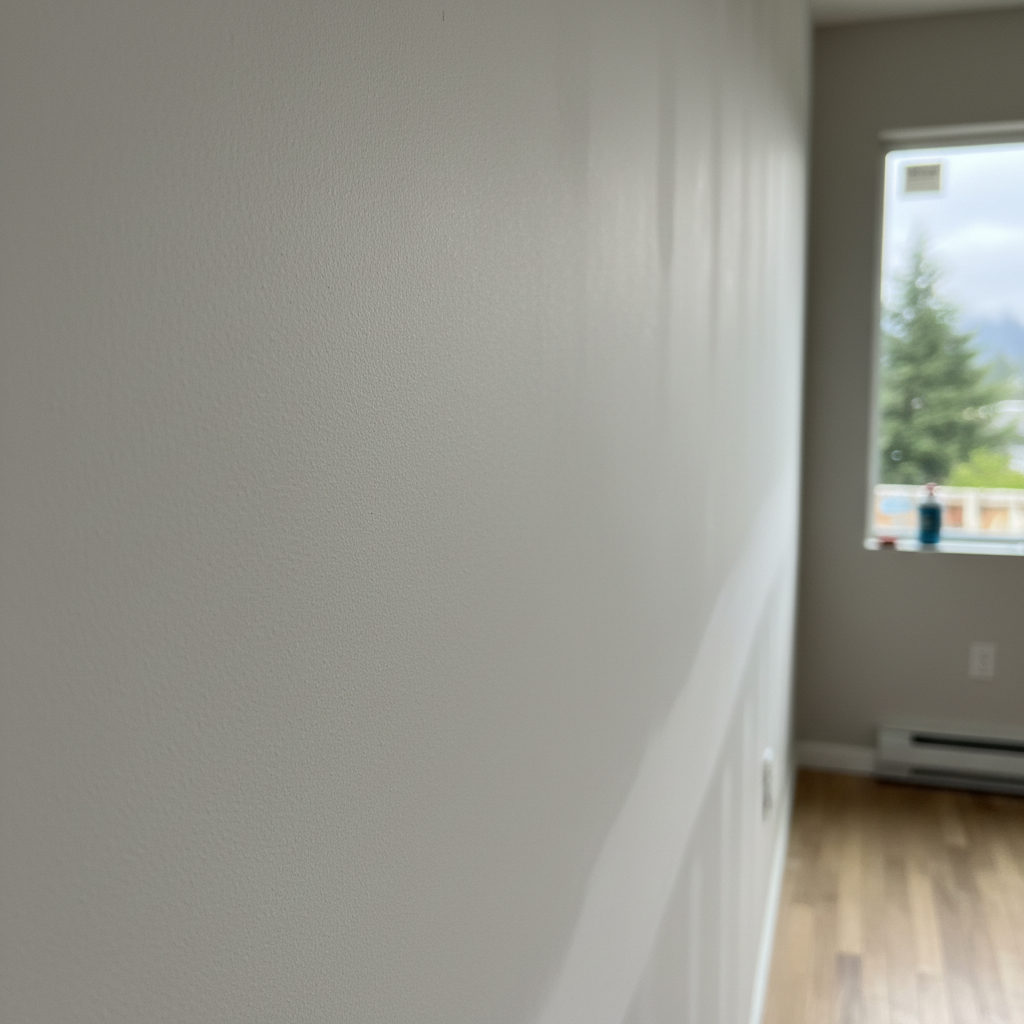
Thinking About Finishing Your Own Drywall?
So, you've got new drywall up, or maybe you've patched a big hole, and now you're staring at those seams and screw heads, wondering if you can tackle the finishing yourself. It's a common thought, especially for folks who like to get their hands dirty and save a buck. Drywall finishing, or 'taping and mudding' as we call it, is definitely a skill you can learn. But let me tell you, there's a big difference between 'learning to do it' and 'doing it well enough that you'll be happy looking at it every day for the next twenty years.' I've seen a lot of DIY jobs over the years here in Tacoma, and some are fantastic, others… well, let's just say they needed a little help from Precision Drywall Tacoma.
Before You Even Think About Mudding
First things first, is your drywall actually ready? This is crucial. If the sheets aren't hung tight, if there are gaps bigger than an eighth of an inch, or if the screws are sticking out, you're going to have a nightmare trying to get a smooth finish. You need to make sure every sheet is firmly screwed into studs or joists, and all screw heads are slightly dimpled below the surface, but not tearing the paper. Any loose sheets will cause cracks down the line, guaranteed. Also, check your corners. Are they reasonably straight? If your framing is wonky, you'll be fighting it every step of the way.
Next, gather your tools. Don't cheap out here. You'll need:
- Good quality joint compound (mud) – all-purpose for most coats, lightweight for the final skim.
- Drywall tape – paper tape for seams, mesh tape for repairs (though I prefer paper for new work).
- Taping knives – a 6-inch, 10-inch, and 12-inch are a good start.
- Mud pan.
- Corner tools (if you have inside or outside corners).
- Sanding pole and sandpaper (120-150 grit).
- Dust mask and eye protection – seriously, drywall dust gets everywhere and you don't want to breathe it in.
- Good lighting – a bright work light that casts shadows will help you spot imperfections.
And one more thing: patience. You're going to need a lot of it.
The Nitty-Gritty: Taping and Mudding
This is where the magic (or the frustration) happens. The goal is to build up thin layers of joint compound over the tape and screw heads, feathering out the edges so they blend seamlessly into the wall. It's not about globbing on a thick layer; that just makes more work sanding later.
Here's a simplified breakdown:
- First Coat (Tape Coat): Apply a thin layer of mud over the seam, embed your paper tape into it, then smooth it out, squeezing out excess mud from behind the tape. Do the same for screw heads, just a small dab. Let it dry completely. This can take 12-24 hours, especially if it's a damp day in Tacoma.
- Second Coat (Fill Coat): Once dry, apply a slightly wider, thin coat over the taped seams and screw heads. You're starting to build up the surface and feather the edges. Let it dry.
- Third Coat (Skim Coat): This is your widest coat, feathering out even further, making sure there are no ridges or humps. This is where you really start to get that smooth finish. For inside corners, use a corner tool or two knives to get a crisp line. Outside corners often benefit from metal or plastic corner bead, which you mud over. Let it dry completely.
Each coat needs to be thinner than the last, and wider than the last. You're basically creating a very gentle ramp up to the seam and back down again. The biggest mistake I see DIYers make is putting on too much mud, or not letting each coat dry fully before the next. That's a recipe for cracks and a lumpy finish.
Sanding: The Dust Bowl
After your final coat is bone dry, it's time to sand. This is the messiest part, no question. Use your sanding pole with 120-150 grit paper. The goal isn't to sand away all the mud; it's to smooth out any imperfections, ridges, or bumps. Sand lightly, using circular motions, and then check your work with that bright light. Any shadows mean you've got a low spot or a hump. You might need to apply another thin skim coat to fix those. Remember, you're aiming for a surface that's perfectly flat and smooth to the touch.
Once you're done sanding, wipe down the walls with a damp cloth to remove dust before priming. Don't skip this step, or your paint won't adhere properly.
When to Call Precision Drywall Tacoma
Look, I'm all for homeowners trying things themselves. It's how you learn. But there are definitely times when calling in a professional is going to save you a ton of headache, time, and ultimately, money. If you're tackling a whole house, or even a large room with lots of seams and corners, it's a huge undertaking. If you've got vaulted ceilings or really tall walls, that's another challenge. And if you're aiming for a Level 5 finish – that's the highest standard, perfectly smooth with no imperfections visible even under critical lighting – then you really need someone who does this every day.
A professional can get the job done faster, cleaner, and with a level of precision that's tough to achieve without years of practice. We've got the specialized tools, the experience to spot problems before they become big issues, and the techniques to make those seams disappear like magic. If you try it and find yourself getting frustrated, or if the results aren't what you hoped for, don't be embarrassed to call us. We're happy to step in and turn those lumpy walls into something you'll be proud to paint.
Ultimately, it's your call. If you've got a small repair or a single wall and you're up for a challenge, go for it. But for bigger projects, or if you just want a flawless finish without the dust and the backache, that's what we're here for.