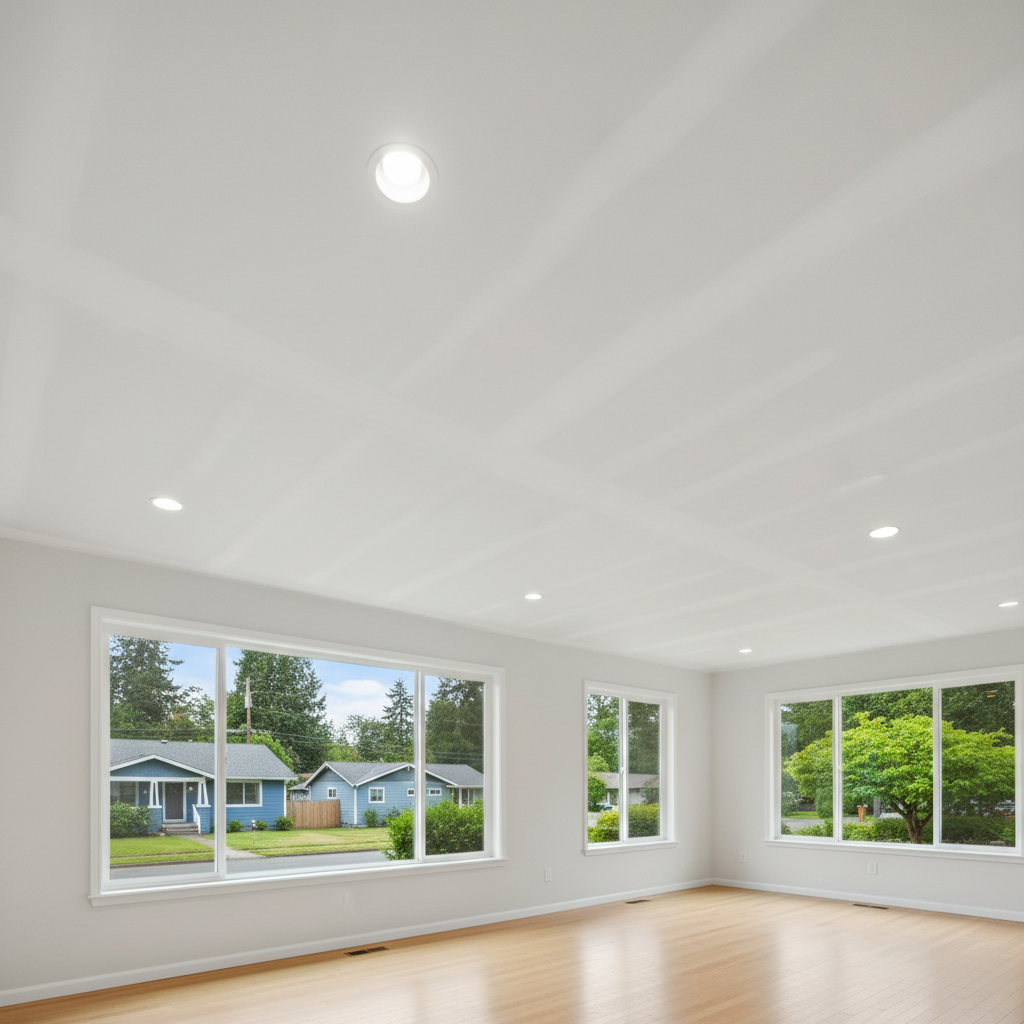
You're looking up at your ceiling, maybe it's got some water stains, or you're finally tackling that basement remodel. Whatever the reason, you're thinking about new ceiling drywall. Now, some folks think ceiling drywall is just like putting up drywall on walls, only, you know, higher. And yeah, it's drywall, but there are some key differences, especially when you're working in a place like Tacoma.
Why Ceilings Are a Different Animal
First off, gravity is a real pain. On a wall, you can lean a sheet against studs, get it positioned, and then screw it in. On a ceiling? You're fighting gravity the whole time. Those sheets are heavy, and they want to come right back down on your head. That's why you often see pros using drywall lifts. It's not just for speed; it's for safety and accuracy. Trying to hold a 12-foot sheet of 5/8-inch drywall over your head while getting it perfectly aligned and screwed in? That's a recipe for a sore neck, a dropped sheet, or worse, a trip to urgent care.
Then there's the finish. You look at walls straight on, but you're usually looking up at a ceiling from an angle, often with light washing across it. This means every little imperfection, every slight hump or dip, every screw pop, gets highlighted. A perfectly flat ceiling finish is much harder to achieve than a perfectly flat wall finish because of how light plays on it. You can get away with a little more on a wall sometimes, but on a ceiling, it's gotta be spot on.
Common Tacoma Ceiling Drywall Projects
Around here, I see a few common scenarios that lead people to needing new ceiling drywall:
- Water Damage: This is a big one in the PNW. A leaky roof, an overflowing tub upstairs, a burst pipe – water finds its way down. Once that drywall gets wet and sags, or you've got mold, you're usually looking at replacement. We've seen plenty of homes in the North End, with their older plumbing and sometimes aging roofs, needing this kind of work.
- Remodels and Additions: Finishing a basement, adding a room, or reconfiguring an existing space often means new ceilings. You want that new ceiling to blend seamlessly with the rest of the house, or to define the new space perfectly.
- Popcorn Ceiling Removal Fallout: While many folks just skim coat over the old texture, sometimes the original drywall underneath is in such rough shape, or the removal process damages it too much, that replacing the ceiling is the better long-term solution.
- Sagging Drywall: Sometimes, especially in older homes where folks might have used 1/2-inch drywall on 24-inch on-center joists, or if there was some moisture exposure over time, you get that tell-tale sag. It's not just an eyesore; it can be a structural issue for the drywall itself.
Why Local Expertise Matters for Ceilings
You might think drywall is drywall, no matter where you are. And for the most part, the materials are the same. But knowing the local conditions and common building practices makes a difference. For example:
- Moisture Management: We live in a wet climate. While ceiling drywall isn't directly exposed to rain, the humidity levels and the potential for leaks are always there. Understanding how to properly seal, vent, and choose the right type of board (like mold-resistant options for bathrooms or basements) is crucial for longevity.
- Older Home Challenges: Tacoma has a lot of beautiful, older homes. These often have irregular framing, plaster ceilings that need to be removed carefully, or joists that aren't perfectly straight. A contractor who's only worked on new construction might be surprised by the challenges, but we've seen it all. You can't just slap up a new ceiling without accounting for the quirks of an old Craftsman or Victorian.
- Building Codes: While pretty standard, knowing the local inspectors and what they look for in terms of fire ratings, screw patterns, and framing can save you headaches and re-work.
When you're dealing with ceilings, you want someone who knows what they're doing. It's not just about hanging the board; it's about the prep, the precise cuts, the proper fastening, and that flawless finish. At Precision Drywall Tacoma, we've hung more ceiling sheets than I can count, and we know what it takes to get it right the first time, overhead and out of your way.